Central Province
Dambulla
Dambulla occupies a pivotal position in Sri Lanka's Cultural Triangle, a Central Province town best known for its UNESCO-listed cave temples and the gleaming Golden Temple that announces the sacred complex to travellers approaching along the main highway. Whilst many visitors treat Dambulla as a brief stop en route to Sigiriya or Kandy, the rock temples alone justify a leisurely half-day, offering five separate caves adorned with more than 150 Buddha images and extensive murals that span centuries of Sinhalese Buddhist art. For British travellers interested in history and faith, Dambulla provides an accessible yet profound introduction to the island's religious heritage.
The cave temples date to the first century BC, though successive kings and devotees expanded and repainted them over the following millennia. Climbing the steps from the base leads through shaded porticos to chambers where reclining, seated and standing Buddhas occupy niches carved from living rock. Ceilings and walls are covered with intricate patterns and narrative scenes, their colours softened by age yet still vivid in places. Photography is restricted inside certain caves, and visitors should dress modestly, covering shoulders and knees, with footwear removed before entering. A local guide greatly enhances the experience by explaining iconography and historical context that might otherwise remain opaque. Allow at least ninety minutes for a thoughtful visit rather than a hurried circuit.
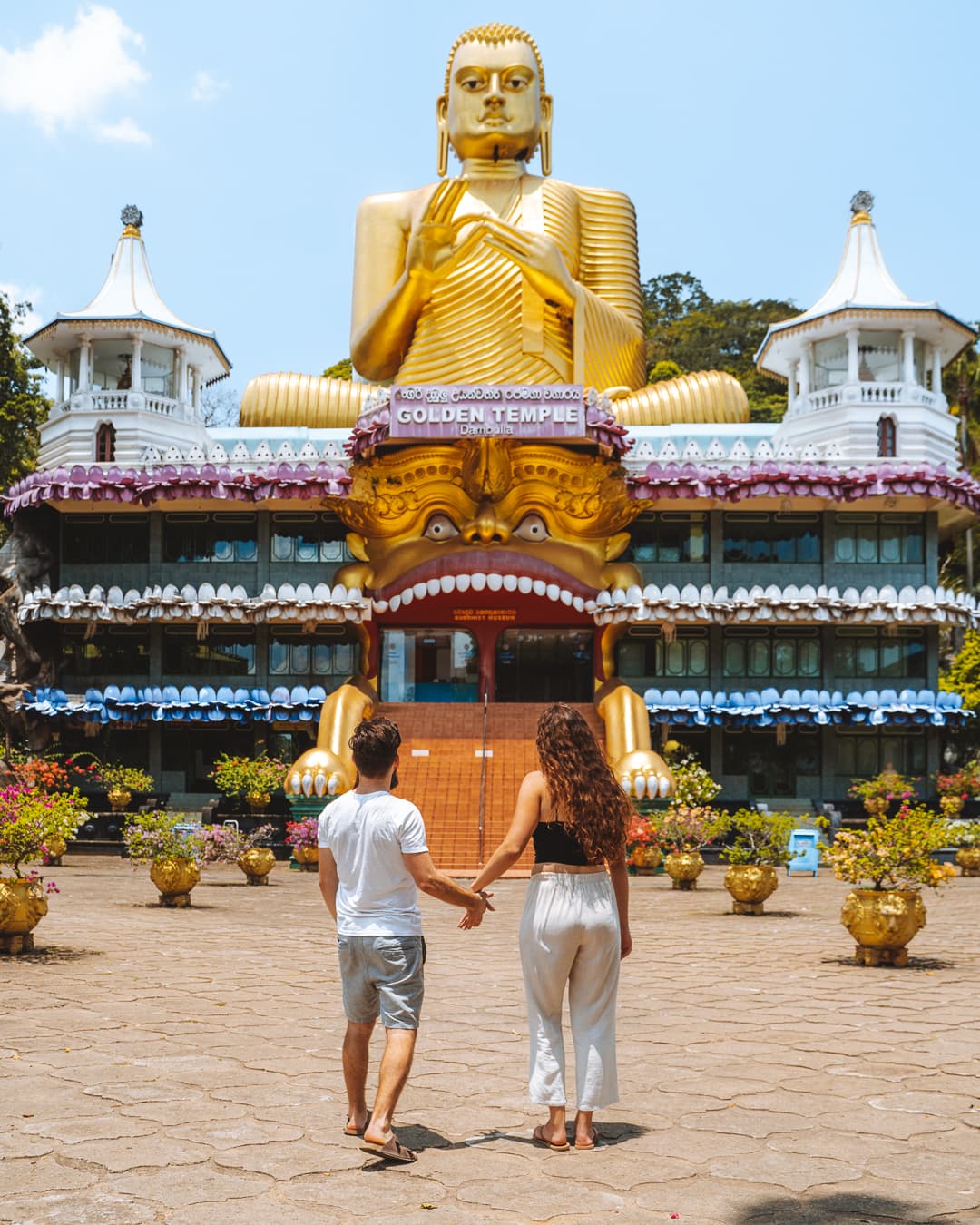
The Golden Temple at the foot of the rock presents a striking modern contrast to the ancient caves above. A large seated Buddha in gold sits above a museum and shrine room, visible from the road and serving as a landmark for the town. Opinions differ on its aesthetic merit, yet it undeniably marks Dambulla as a centre of contemporary devotion alongside its archaeological treasures. The surrounding area includes markets, eateries and accommodation ranging from simple lodges to comfortable hotels that cater to Cultural Triangle itineraries. Fresh fruit stalls and rice-and-curry shops provide affordable meals between sightseeing stops.
Dambulla's location makes it an excellent base for exploring Sigiriya, Polonnaruwa, Minneriya and even Anuradhapura on longer day trips. Unlike staying directly at Sigiriya, Dambulla offers lower prices and good transport links, with tuk-tuks and hired cars readily available. Early-morning visits to the caves avoid heat and crowds, whilst late afternoon light can be particularly flattering for exterior photography. Combine the temples with a spice garden visit or a meal in town for a rounded introduction to central Sri Lanka. The cave complex opens early, making it feasible to visit before driving onward to other sites.
British visitors will find the climb manageable with sensible shoes and a steady pace, though the steps can be warm underfoot by mid-morning. Carrying water and wearing a hat are simple precautions that improve comfort considerably. Dambulla requires no specialist fitness, making it suitable for older travellers and families with children old enough to appreciate the art and atmosphere respectfully.
Dambulla suits culture-focused travellers, families and anyone constructing a logical route through the island's ancient sites. The reward—a sequence of cave shrines unlike anything in Europe—ranks among the most memorable sights in the country. Allow time to absorb the art and atmosphere rather than rushing through, and Dambulla will anchor your understanding of Sri Lanka's enduring Buddhist civilisation whilst serving as a practical hub for the wonders that surround it. Pair a morning at the caves with an afternoon rest before an early start at Sigiriya the following day, and you will have organised your Cultural Triangle days with both comfort and efficiency in mind.